
Parakeets
In December 2020, I returned to the home I grew up in for the last time
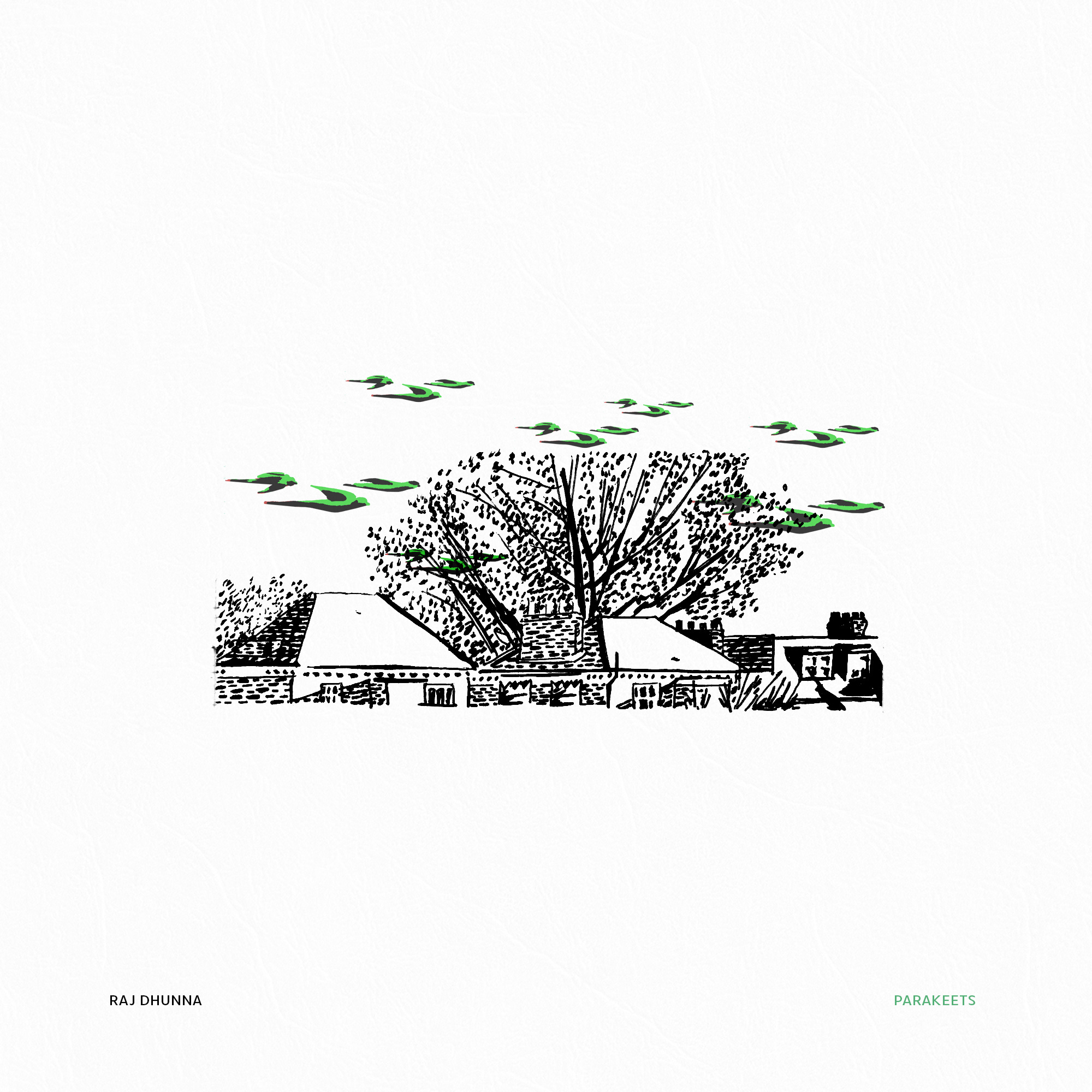
It was approaching Christmas when I visited our family home of 20 years for the last time.
Mum had already relocated to the other side of Staines bridge. Dad had sold up and was preparing to move downriver, towards Kingston.
Cardboard boxes filled with old things sat in the hallway. Framed pictures had been taken down from the wall. There was no sofa in the living room any more. Beyond the drift of my memories, the house was an empty shell.
As evening turned, after a quiet dinner, I sat at my bedroom desk and stared out of the first-floor window onto the back garden that my parents had tended to every spring and summer. Its once-blooming flower beds were dead, damp and glistening in the festive cold.
Come rain or shine, this perch had been my salvation since I was 10.
The old, wrinkled laburnum tree in the middle of our lawn.
The wooden shed which housed paint cans, metal tools and the mower that I would top up with petrol to use every couple of weeks.
The ivy-gripped wall at the back, over which, in soft teenage mischief, I would launch fallen apples and wait for the thud of them landing on the other side.
In the distance, the blocks of flats to the left, and the heron perched by a communal pond near the towpath to the right.
Flocks of ringneck parakeets passed by, squawking in a foreign tongue, lighting up the cloudy sky with their green feathers, nesting in the willow trees drooping over the river.
Every few winters, the Thames would burst its banks, flooding our road and its gardens, making my bedroom feel like a lighthouse control room peering out over a sea of suburbia.
On summer evenings, when the air was warm enough to open my window, my stomach would growl the moment I smelled the cumin seeds and chopped onion frying in Dad’s scorched black karahi, its fragrant steam pouring out through an extractor fan from the kitchen below.
Every few minutes, aeroplanes flew low overhead, taking off and landing at Heathrow, whose fenced grounds had welcomed one half of my family six decades earlier, whilst the other half toiled, loved and laughed among the neighbouring home counties.
I used to arrive home after school, or from nights out drinking in pubs, smoking weed in riverside parks and getting lost on dance floors to the sounds of the inner-city. Then I would sit in the light of the passing sun or a reading lamp and project my feelings onto the view in front, as if contemplating a painting in the empty corner of a gallery.
My slippers grounded on thick carpet, I spent hours annotating books, avoiding homework and revising for exams. I trawled through online forums to collect the latest grime and rap releases. I wrote neurotic thoughts down in a paper diary. I mourned family elders and longed for disinterested crushes.
When it was dark outside, in the reflection of the glass, I watched myself grow in height, nurture tufts of a beard and struggle to keep an innocent smile.
On that seat, in front of that view, I developed a vague aspiration to become an author.
Now it was time to say goodbye.
The next morning, I put on a pair of earphones and selected an old Rinse FM set of UK garage classics: a bouncy, melodic selection of Chris Mack and Steve Gurley releases from the late-1990s. I changed into some worn shorts, a faded t-shirt and a pair of holed running trainers.
Jogging from the front door, starting a route I’d taken hundreds of times before, I turned left out of the swinging black gate, passed the street lamp at the end of the road that visiting friends and I used to employ as cricket stumps and headed down the alleyway.
I took a left at the towpath and kept going. Past houses whose gardens sloped down onto the river bank. Past men raising Union Jacks and St George’s flags to the top of their poles. Past wooden benches I used to sit on when I was stressed, facing out onto boats gliding by.
After two kilometres I reached Penton Hook Lock, a junction beside two islands where, uniquely, the Thames curves round to reconvene with itself, wrapping two islands inside a bow.
My feet clunked over the bridge’s chipped wooden beams and landed onto the first, smaller island guarded by a lock keeper’s shed. I crossed the concrete of the second bridge, over a foaming dam, to arrive on the main island. In local lore, victims of the bubonic plague are said to have been laid to rest there in the 14th century.
Sticking anticlockwise to the muddy path, dodging weeds and nettles, I passed fishing platforms jutting out into the river, dipped my head under the low branches of unkempt trees and hopped over weather-worn bouquets of flowers laid by local mourners.
On the island’s far side, beyond the puddles, squirrels and shadows, the path opened up into a small bay. I’d never stopped before to experience its calm, always passing by in a rush against the clock to get home. This time, I removed my earphones and walked down the small flight of steps. River water lapped on the silty shore, decorating the silence.
Taking my iPhone from my pocket, swiping it accidentally, a photo memory appeared on the screen. It showed an Om of pink roses leaning against the brick wall of a crematorium.
I swiped again.
The next showed me as a toddler wrestling Grandpa on the living room carpet in Southall.
I swiped again.
The next showed Grandma kissing him on the cheek whilst he cut his birthday cake, a rare display of public affection.
It had been five years since we looked through old photo albums after Grandpa’s funeral.
I took a deep breath, closed my eyes and tipped my head back towards a clear sky painted with aeroplane trails.
Beautiful bro ❤️