
The City Disappears
Rebuilding memories from a train window in south London
Having spent my adolescence hovering at the edges, venturing in on day trips and nights out, I moved into London proper a little over a decade ago. I have remained south-of-the-river ever since.
I realise now that my first rented home belonged to a different era. Given the city’s housing crisis, it would be impossible for a 24-year-old on an education charity starting salary to pull it off in 2026.
I’m grateful to have been able to experience this, but regretful about the subsequent direction of travel and what this means for future generations.
Our flat was an anomaly: squat-roofed, two-bedroom, plonked on a two-storey business centre in Loughborough Junction, the residential hinterland straddling Coldharbour Lane, between Brixton and Camberwell.
I don’t know who commissioned it; who allowed it to be built in such bizarrely standalone fashion; what stories it held within it before I arrived, or after I left.
I do know that, now, it exists only in my memories. Because recently I passed it on the train and it was no longer there.
We lived there for one year. Entering involved passing through several layers of security, making what might have seemed like an unsafe residence a fortress in actuality. My flatmate and I would type in a code at the entrance to the side of the estate, open and shut the heavy steel gate otherwise used for cars and lorries, unlock a peeling wooden door leading into our own dark, cobwebby stairwell, then climb it to our front door on the third floor.
Inside was a haven. In-the-mix but peaceful. Gritty but comfortable. Silent, apart from the occasional passing train or police siren.
Nobody knew we were up there. We had no adjoined neighbours, apart from those who frequented the small businesses, community churches and storage facilities in the offices crammed along corridors beneath our feet during the day.
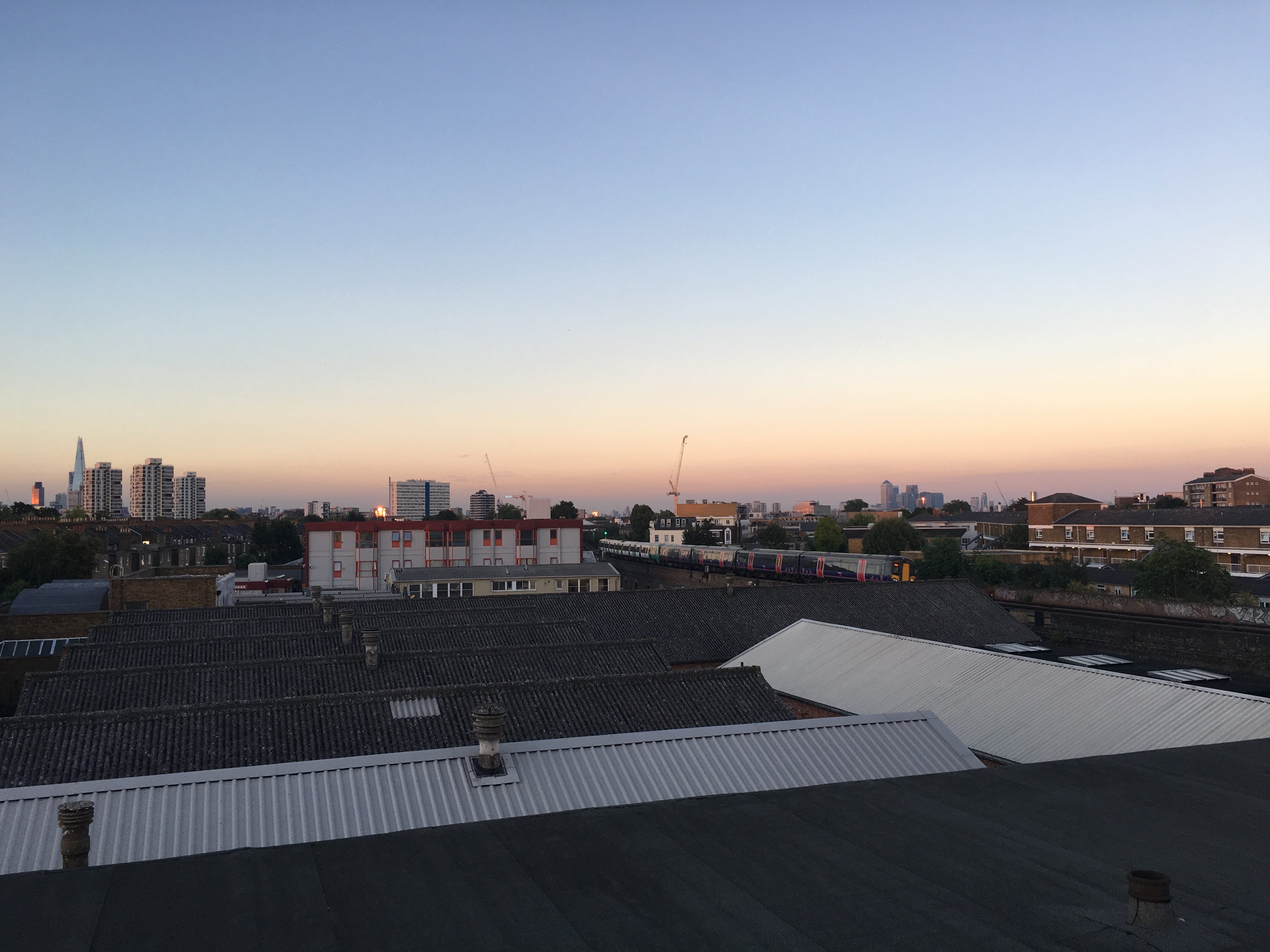
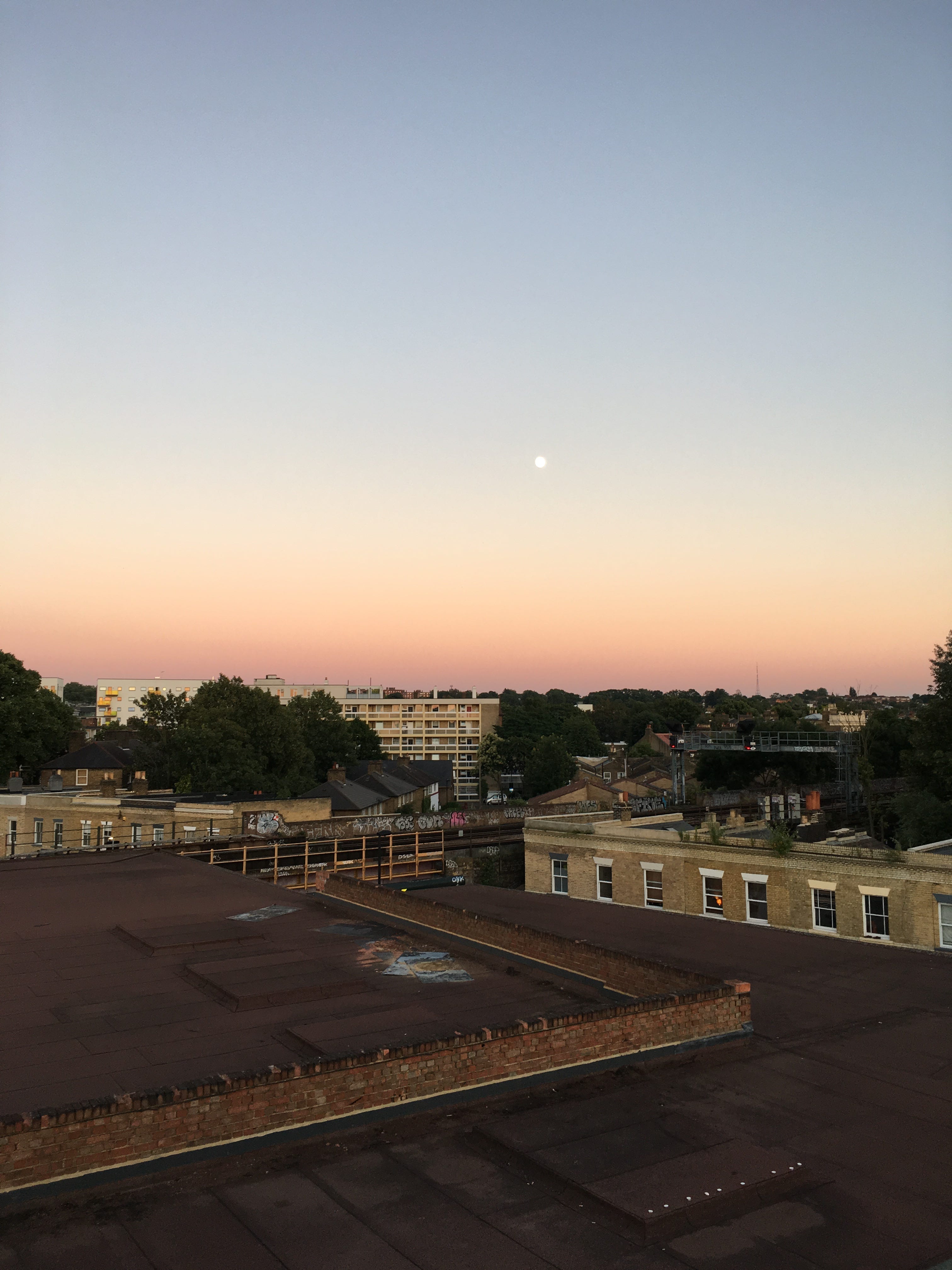
We were high enough to gain full access to the skyline in every direction, and therefore a continuum of light pouring in from all angles between sunrise and sunset.
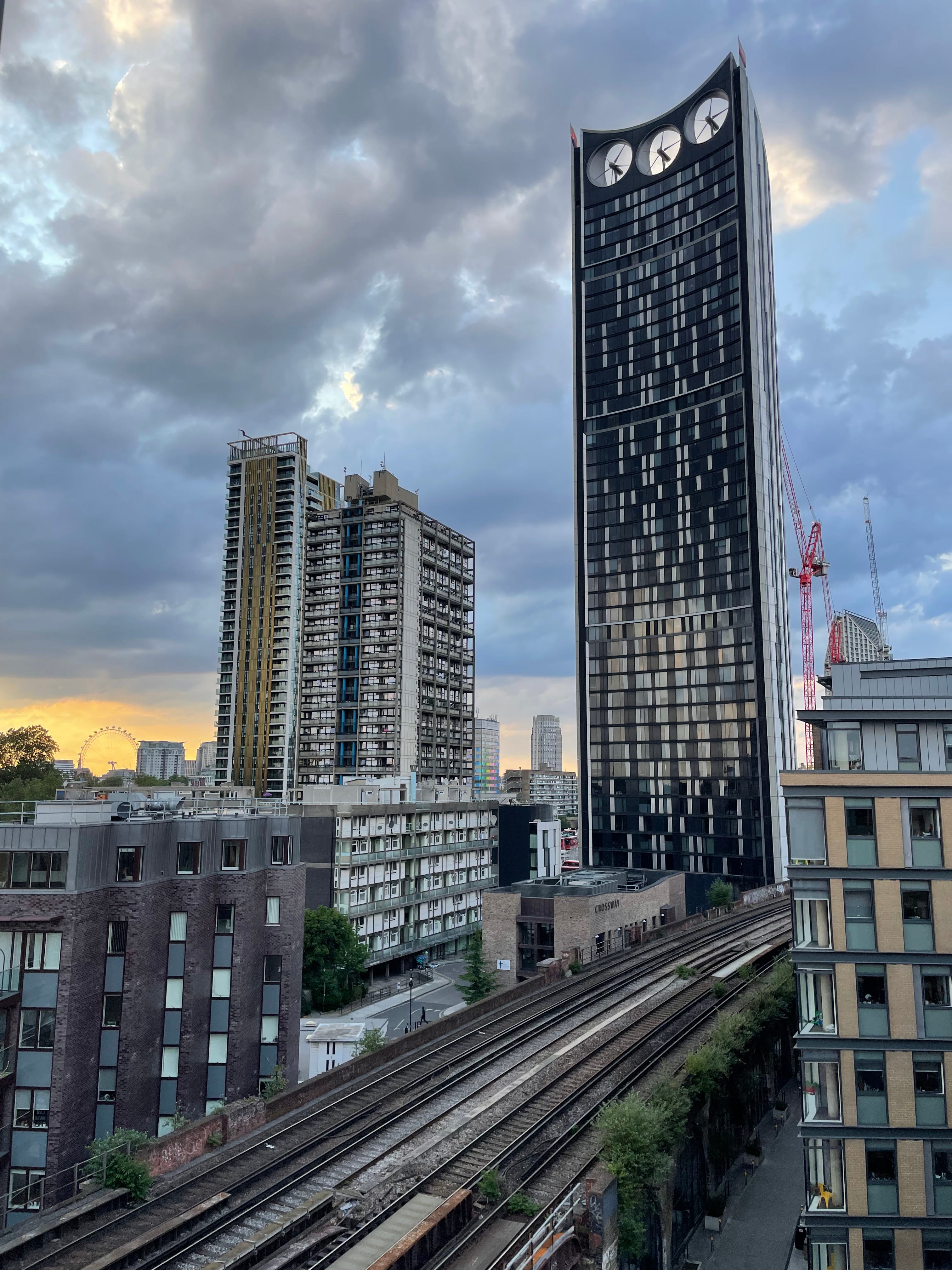
I could take a bath, open the window next to it wide, lean back against the bubbles and peer north with a clean view of the metropolis: Strata in Elephant & Castle, The Shard in London Bridge, the towers of Canary Wharf blinking red at night like the eye of Sauron.
The cracked, single-glazed french windows of our living room opened out onto a private roof terrace the size of two tennis courts. It was so big we didn’t know what to do with it. We installed plants that died. We bought a picnic bench that served as our hosting perch. We wired up speakers to blast music into the night sky.
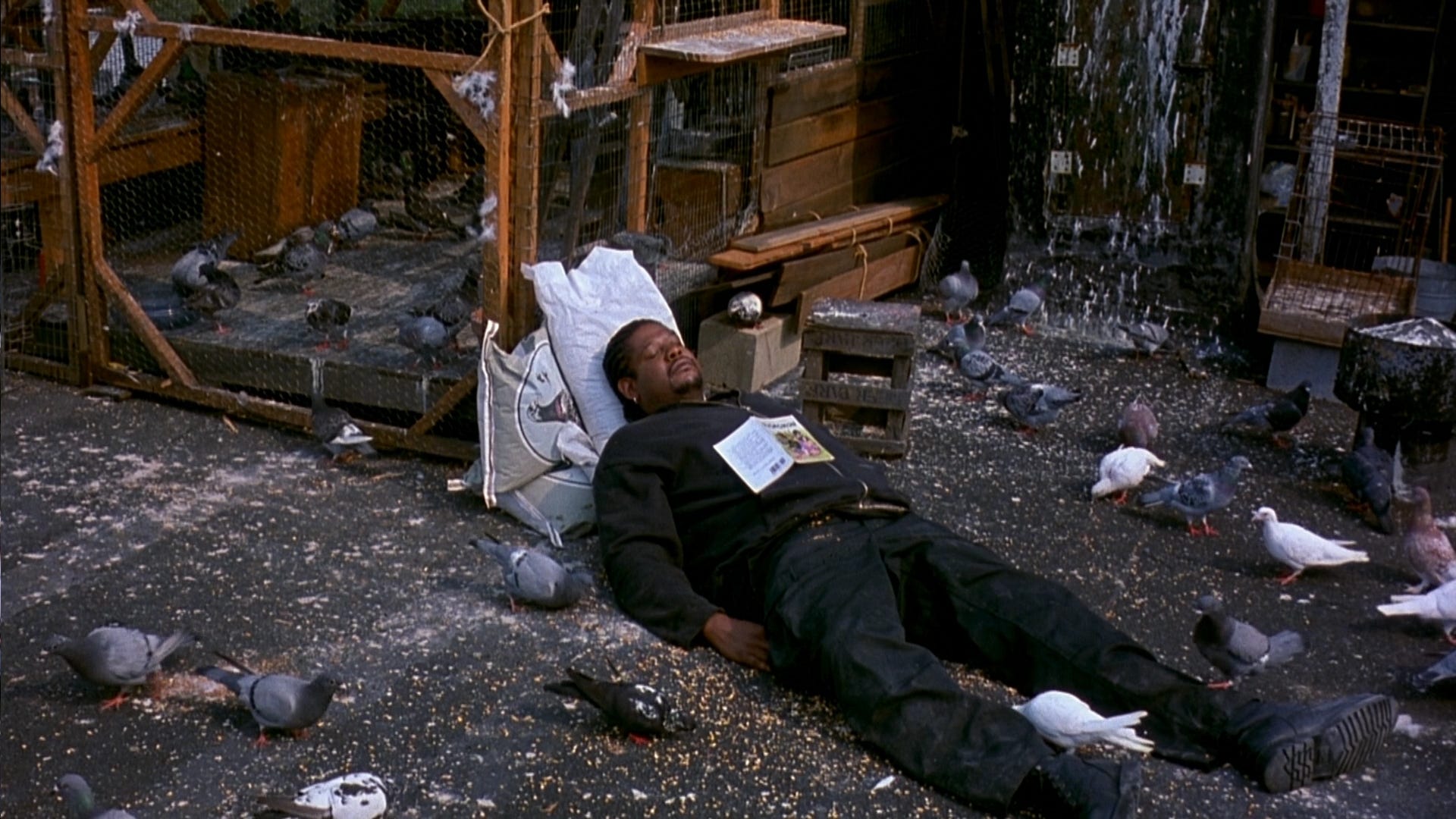
Flocks of pigeons bathed in the rainwater that collected in puddles on the uneven surface. During reflective evenings, as autumn turned to winter, I would light a candle to write my diary and imagine myself as Forrest Whittaker’s samurai-hitman, Ghost Dog, meditating in his lair.
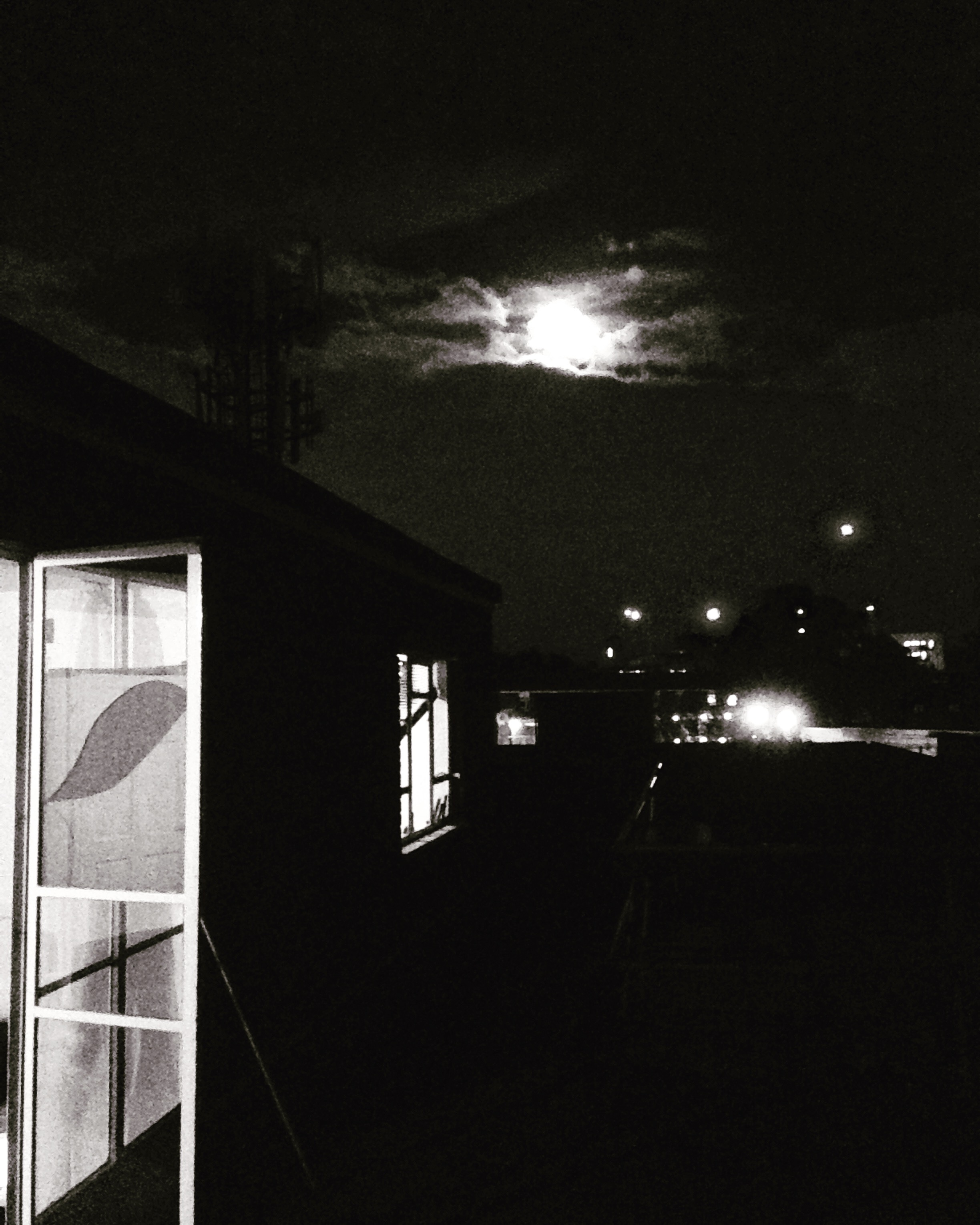
We assembled parallettes from which to practice handstands on the bouncy tarmac. We hosted drunken, hazy dinners where smokers would gather under the still moonlight.
There was no railing stopping us from falling off the edge. There is no way this was legal. The former twenty-something inside of me finds this liberating and funny — a sign of living free, without rules or overthought. The man approaching my mid-thirties gets anxious remembering our parties and what could have happened.
One morning, we woke up to find that the mysterious, garden shed-shaped, brick structure on the far side of the roof had been graffitied. The artists responsible must have climbed up from the road and operated silently at night as we slept, right outside our bedroom windows. Our sanctuary was no such thing.
We lived next to, and at the same height as, the Thameslink tracks that brought trains whizzing back-and-forth between Loughborough Junction and Elephant & Castle, the city and the southern boroughs, the skyscrapers and the housing blocks.
Past the youth club, where we started volunteering — initiating the story of my book, Cut Short. Past the scrap metal works, a small community park, Loughborough Estate, Flaxman Sport’s Centre, Ebony Horse Club and the labyrinth of tucked away balconies hidden above and behind the row of convenience shops and takeaways.
Sometimes, the train would come to a halt right by us, suspended between stations, so that we could wave at the stone-faced passengers on their delayed journeys. I wonder how many of them knew they were travelling through what back then, entering the late-2010s, was becoming one of the most violent parts of London for teenagers.
Those stopped trains would make me think about Alex Kotlowitz’s narrative nonfiction classic, There Are No Children Here, a heart-wrenching, forensic account about two brothers growing up with their mother on Chicago’s East Side.
In the opening pages, the children play outside in the dusty park beneath the railway line with their friends, climbing on an abandoned car. A train passes by, and commuters onboard, wary of the local neighbourhood’s violent reputation, hide from the windows in fear of stray bullets. Inversely, the children below see the train coming and hide inside the car carcass, placing themselves out of view in fear of the commuters’ surveillance and judgment.
Stalemate.
That year, I started working at a secondary school in Elephant & Castle. When I was too lazy to cycle, I figured out a cheat code to make my own commute on that very same train line laughably short and cheap. There were no barriers at Loughborough Junction or Elephant, so I could hop on for free and hop off four minutes later, adding up to a door-to-door journey of 10 minutes.
Elephant was — as it always has been, and as I suspect it will remain — a case study in head-spinning city flux. But back then, with the old, battered shopping centre and its moat at the heart of the roundabout, and the remnants of affordable housing nearby, it still felt like south London proper.
Teachers at the school I worked at who’d been there for decades told horror stories from the mid-2000s. Of students bringing in guns and robbing teachers. Of one shady former colleague being caught running a brothel underneath the railway arches, or another employing students to deal drugs on their way home from school. Of fireworks being let off in lessons.
By the time I arrived in 2015, those days were long gone, but despite the strict, professionalised efforts of the glitzy academy system that had swooped in to rescue the school’s former special measures, social breakdown — classroom hunger, permanent exclusions, stabbings outside the gates — was never too far.
To get there from the station, I would walk around the huge, fenced, razed piece of land that had once been Heygate Estate. An eerily emptied graveyard of postwar social housing, I could peer in to see the builders in hard hats holding clipboards, and tractors and cranes clearing the way for the next phase of London’s evolution. Over subsequent years, I watched the shiny megastructure of Elephant Park that replaced it get built up and up and up: 30 floors of metal and glass, pseudo-public land dampened by delicate water features and chain restaurants selling small fusion plates.
If the bulldozing of my shallow memories feels strange, I wonder how painful it must be to have grown up within a stone’s throw of areas like this, like so many of the young people I worked with at the time. To see your whole lifetime — the bouquets of flowers left on the pavement, the bus stop where you and your friends buss jokes, that convenience store that sold crispy empanadas, that hair salon where your mum went to feel renewed — disappear under the city’s unforgiving, relentless layers.
I recently moved into Streatham, which means I am back living in Lambeth borough, if further south. Now, to get to work, I walk along the side of Tooting Common to take the Northern Line from Tooting Bec up to my office in Old Street. But sometimes, to mix it up every couple of weeks, instead I catch the Thameslink to Farringdon and walk among the morning buzz.
I remain convinced that this is the most visually stimulating train journey in London. When visitors to the capital ask me for quirky recommendations, I tell them to catch the Thameslink.
But unlike the commuters in Chicago, hiding from the window, I fill my face with it. It bobs and weaves above parks, estates, luxury flats, carparks, churches, abandoned pubs — all that south has to offer. It is the perfect way of seeing the city, from the filthy to the pristine, the dead to the alive.
Passing between Loughborough Junction and Elephant, I peer out over what used to be my beloved rooftop. The old business centre has been knocked down. A new, stylish one has replaced it.
The city disappears.
I lived off Coldharbour Lane in 1987. An area that was perpetually being gentrified then slipping back.