The Great Western
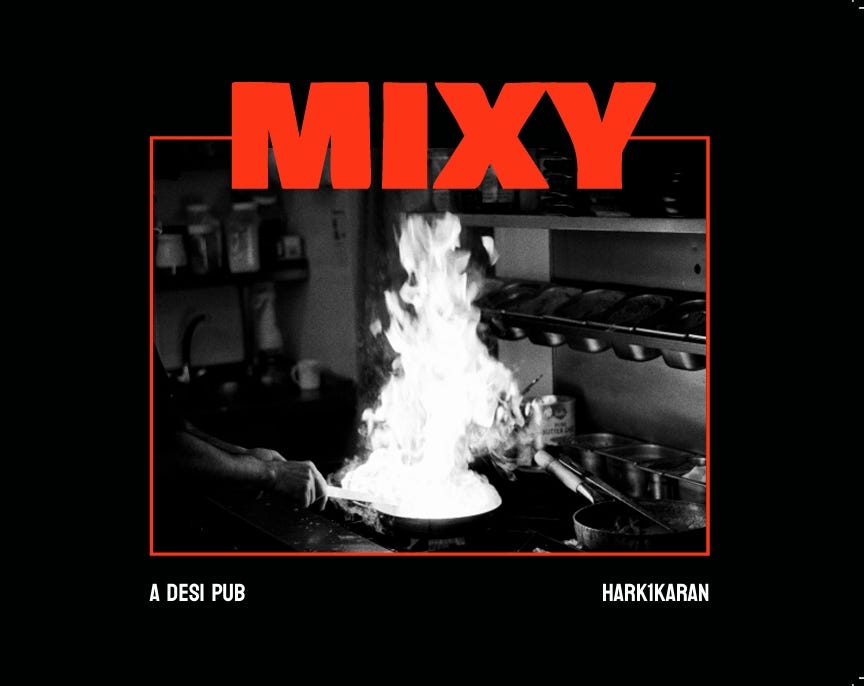
Desi pubs, hand tattoos and Heathrow nostalgia: going for a mixy in Hayes. Photography by Hark1karan
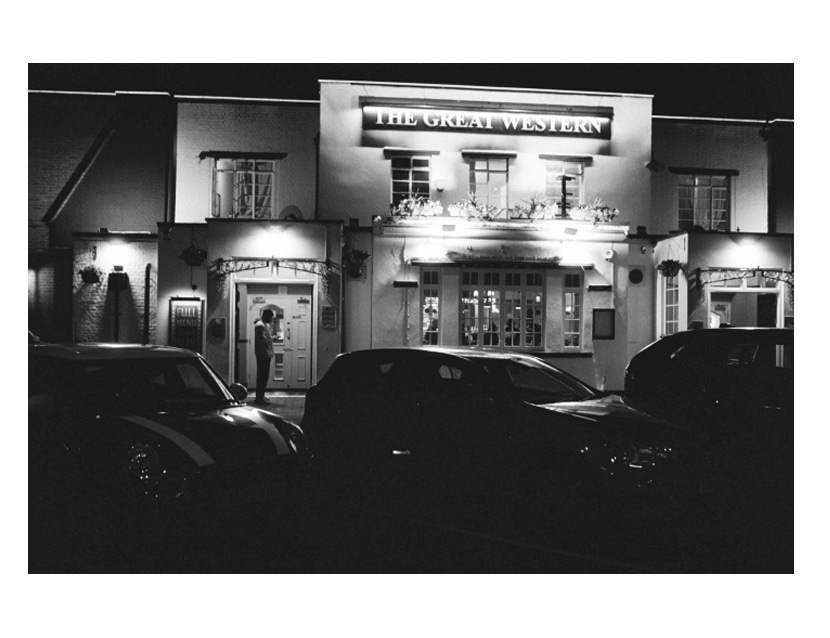
Two paintings hang on the walls of The Great Western, a grand desi pub on a residential roundabout just north of Heathrow Airport in Hayes, west London.
One of them depicts a young woman leading a donkey past a cottage with a thatched roof. The other is a portrait of an aristocrat posing in uniform.
Both sit illuminated beneath the horizontal beams of picture lights, as if part of an art exhibition that was never cleared away.
If I had to guess, I would place their origins in the early-20th century. They look old.
My assumption is that both have survived turnings-of-hands as the pub has been sold and bought by different landlords.
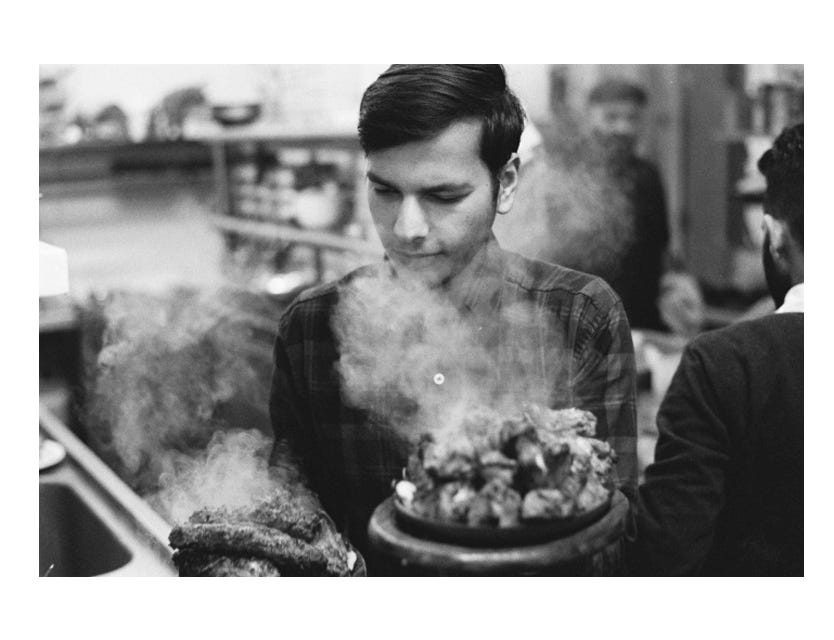
Every time I sit down, drink a pint of lager and eat a tandoori mixed grill — a ‘mixy’ as they are known among British Punjabis, a colloquialism that inspires the title of photographer Hark1karan’s new book — the paintings sneak into my periphery.
Against a soundtrack of bassy bhangra, UK garage and hip-hop, the hissing of chopped onion on hot plates being carried by frantic waiters and the televisions playing live sport from every angle, these framed images could not feel more out of place.
Who put them up? How long have they been there? What lives did their subjects lead?
I’m content with leaving these questioned unanswered. Bizarreness is a core ingredient in the desi pub aesthetic.
Uncompromisingly Punjabi in sound, smell and taste, yet housed by the preservation of cosy, traditional English hospitality and architecture, this is a hybridity that I know well. I can feel it in my bones.
In 2023, I wrote about how returning to Southall to experience its music culture that year allowed me to reconnect with a younger version of myself.
Ever since, only a short drive up the Uxbridge Road from my paternal grandparents’ former home, The Western has played a supporting role in the sequel stage show of my nostalgia.
Excitement about desi pubs proliferates online — I wrote about them for Vice in 2019 and for my chapter in London Feeds Itself in 2022 — but there is a fortunate paradox to their value.
No matter how much their idea becomes fetishised by food influencers, or appropriated by plusher inner-city copycats, the purest among them are so out of the way that, despite the hype, they remain protected from the masses through sheer inconvenience.
They live on back roads, far from tube or train stations. They stand near dreary brooks and canals, where they might once have provided shelter for passing boatmen, or coach passengers, or brick sellers. They back onto streets of unkempt terraced houses, from which the loyalest punters might emerge with a glint in their eyes.
They can be spit-and-sawdust or glitzy. At their best — like all alcohol-fuelled, male-dominated spaces, there are many things to be said about their worst — they weather the storm of English pubs’ wider collapse because of their ability to hold people in their seats and turn a profit by serving hearty food at scale.
Since shortly after The Western reopened a few years ago, I’ve visited every couple of months.
When my friend, who grew up in south London but now lives in Berlin, was back here visiting for a weekend, he asked if we could go somewhere to watch the football. So I took him to the Western.
When my other friend dealing with tragic family breakdown told me he was struggling, I picked him up, drove him to the Western and we sat in the garden at sunset eating garlic naans, chilli paneer and makhani daal.
When my other friend, a professor of sociology at Stanford, was visiting London in the autumn, I had one day to give him a tour. We started off with lunch in the upstairs dining room at The Cow in Notting Hill — an Irish pub famed for its Guinness-and-Oysters — then walked for four hours west across the capital, stopping at Gunnersbury Park Museum to see the exhibition about Southall’s history of political resistance, before finishing with dinner and pints at The Western.
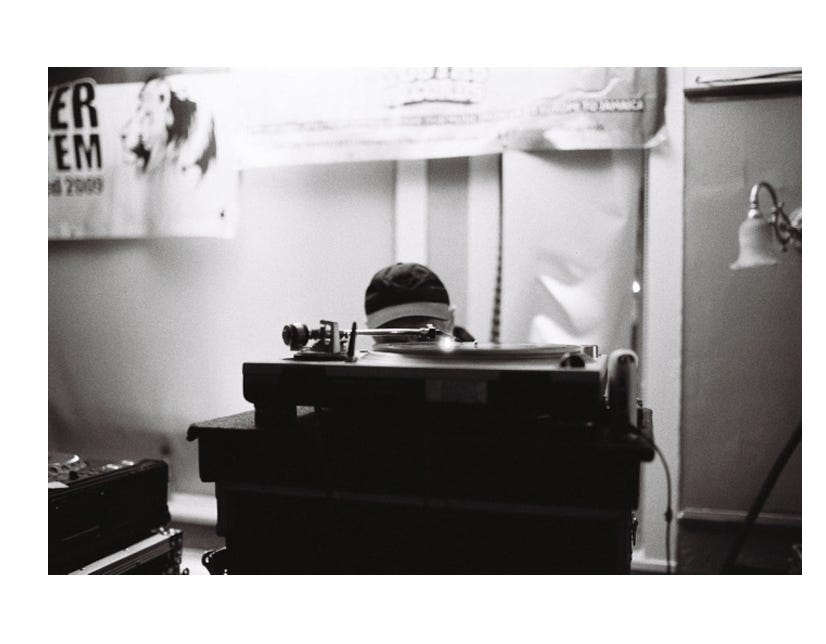
My visits have often been followed by a short Uber ride through Hayes’ suburban hinterland to Brook House Football Club for a dub reggae event.
Occasionally, The Western itself — windows boarded-up, floorspace full of stomping feet, walls shaking with bass — shelters a dance, too.
But there is charm in Friday evening’s business-as-usual.
The middle-aged couple enjoying date night.
A car park full of excessively modified BMWs.
Hand and forearm tattoos.
Rows of Jameson whiskey that will not be there tomorrow.
Competing eyes at the pool table.
A fight about to break out.
The security guards who won't let it.
The creaking but functional foundations of multicultural Britain standing strong against darker forces marching elsewhere.
This era of my life is over.
But I will cherish the good times.